the Five Elements
Understanding the Five Elements Philosophy: A Timeless Guide to Balance and Harmony
Jun
For thousands of years, the Five Elements Philosophy has been a cornerstone of Eastern culture and thought. More than a symbolic system, it offers a way of understanding the natural world, personal growth, and the interconnected forces that shape our lives.
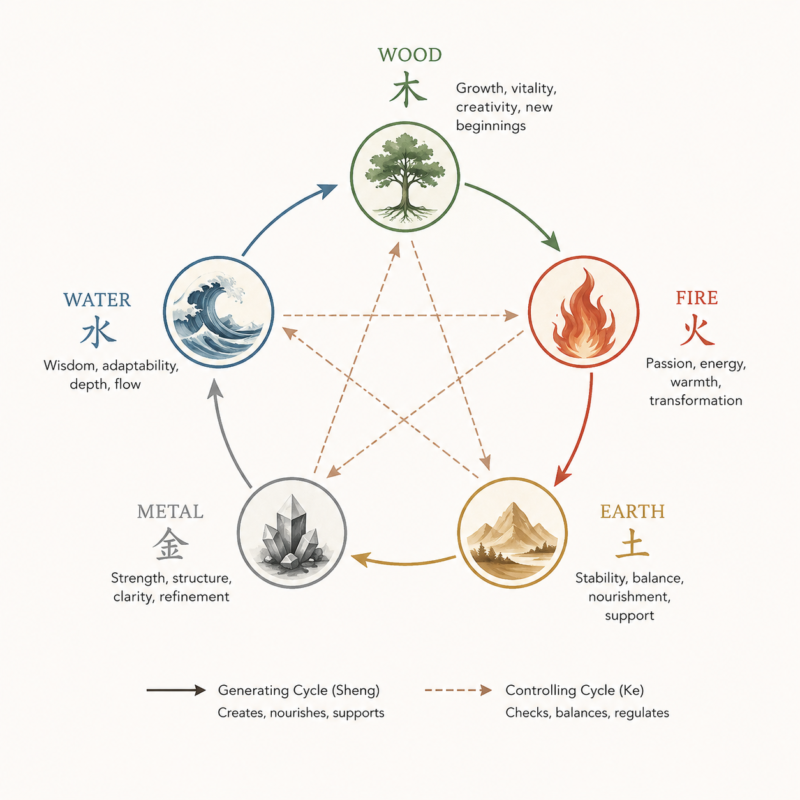
The Five Elements—Wood, Fire, Earth, Metal, and Water—represent different qualities, energies, and patterns found throughout nature. Together, they form a dynamic framework centered on balance, harmony, and continuous transformation.
Today, this ancient philosophy continues to inspire art, architecture, design, wellness practices, and meaningful jewelry around the world.
What Are the Five Elements?
The Five Elements are not physical substances but symbolic representations of natural forces and cycles. Each element reflects qualities that can be observed in nature and experienced in everyday life.
Wood
Wood symbolizes growth, vitality, creativity, and new beginnings.
Just as trees grow upward while remaining deeply rooted, Wood represents progress, vision, expansion, and continuous development. It is often associated with fresh opportunities and the pursuit of personal growth.
Fire
Fire symbolizes passion, energy, warmth, and transformation.
It represents movement, inspiration, enthusiasm, and the drive to create positive change. Fire reminds us of the power of motivation and the importance of embracing life’s dynamic moments.
Earth
Earth symbolizes stability, balance, nourishment, and support.
Like fertile soil that sustains life, Earth represents grounding, patience, reliability, and a strong foundation. It encourages steadiness and harmony amid constant change.
Metal
Metal symbolizes strength, structure, clarity, and refinement.
It reflects discipline, focus, determination, and resilience. Metal reminds us of the importance of purpose, organization, and staying aligned with what truly matters.
Water
Water symbolizes wisdom, adaptability, depth, and flow.
Water moves effortlessly around obstacles while maintaining its direction. It represents flexibility, intuition, resilience, and the ability to navigate change with grace.
The Importance of Balance
At the heart of the Five Elements Philosophy is the concept of balance.
Each element interacts with and influences the others. Rather than existing independently, they form an interconnected system where every force contributes to the whole.
The philosophy teaches that harmony is not achieved through perfection, but through maintaining a healthy balance between different qualities and energies.
Growth requires stability. Strength benefits from flexibility. Action is complemented by reflection. Together, these contrasting yet supportive forces create a more balanced and fulfilling life.
The Five Elements in Nature
The natural world provides countless examples of the Five Elements working together.
Trees grow from the earth.
Fire transforms and renews.
Earth provides nourishment and stability.
Metal forms within the earth over time.
Water flows through landscapes, sustaining life along its journey.
These relationships illustrate the continuous cycles of growth, transformation, and renewal that define both nature and human experience.
The Five Elements in Modern Life
Although rooted in ancient traditions, the Five Elements Philosophy remains highly relevant today.
Its principles can be found in many aspects of contemporary life, including:
- Personal development and self-reflection
- Interior design and architecture
- Art and creative expression
- Lifestyle and mindfulness practices
- Wellness and intentional living
- Meaningful jewelry and symbolic accessories
Many people are drawn to the philosophy because it encourages a deeper appreciation for balance, adaptability, and personal growth.
In a fast-paced world, the Five Elements offer a timeless reminder that every stage of life has value and every challenge presents an opportunity for transformation.
The Five Elements and Jewelry
For centuries, natural materials and gemstones have been used to express cultural traditions, personal values, and meaningful symbolism.
At Zen Wu Xing, the Five Elements serve as an important source of inspiration. Natural gemstones, colors, textures, and design elements are thoughtfully combined to reflect the beauty and symbolism associated with different aspects of the Five Elements Philosophy.
Rather than following temporary trends, we seek to create jewelry that celebrates nature, craftsmanship, and timeless wisdom.
Each piece is designed to honor the individuality of natural gemstones while reflecting the enduring principles of balance, harmony, and meaningful living.
Why the Five Elements Still Matter Today
The enduring appeal of the Five Elements lies in their simplicity and universal relevance.
The philosophy reminds us that life is constantly changing, yet balance remains essential. Growth and stability, strength and flexibility, action and reflection all play important roles in creating a meaningful and fulfilling journey.
By understanding the Five Elements, we gain a deeper appreciation for the natural world, our own experiences, and the connections that unite them.
Final Thoughts
The Five Elements Philosophy is more than an ancient concept—it is a timeless perspective on balance, growth, and harmony.
Its wisdom continues to inspire people around the world, offering valuable insights into the relationships between nature, culture, and everyday life.
Whether explored through history, design, personal reflection, or meaningful jewelry, the Five Elements invite us to embrace change, appreciate balance, and find beauty in the interconnected patterns of the world around us.
